ECCV 2026 Tutorial
Evaluating Visual Foundation and World Models
From Visual Understanding to World Modeling
About
The rapid advance of visual AI has produced a converging family of visual foundation models (VFMs): large-scale pretrained systems that consume or generate visual signals, and often interface with text and actions. This umbrella spans visual understanding models such as multimodal LLMs, visual generative models built on diffusion, flow-matching, or autoregressive approaches, and, increasingly, world models that simulate environments to support planning and interaction. As generation matures into interactive, 3D-consistent, action-conditioned simulation, it is not enough to ask whether an output looks right; we also have to ask whether the world a model imagines stays coherent over time, obeys physics, and can sustain an agent acting within it. As these models move from research prototypes to deployed systems, rigorous evaluation is no longer a secondary concern; it is the primary bottleneck gating further progress.
Evaluation now shapes the entire development cycle. Leaderboards ground comparisons in human preference, but a single scalar reveals little about negation, compositionality, or physical plausibility, and in the era of RLHF every weakness in a reward model becomes a target for reward hacking. This half-day tutorial traces the full arc of VFM evaluation, from visual understanding through image and video generation to world models for embodied intelligence.
Topics
- Evaluating visual understanding: capability benchmarks for perception and reasoning, plus reliability concerns like hallucination, robustness, and contamination
- Evaluating image and video generation: compositional benchmarks, physical plausibility, and learned reward models
- Evaluating world models: 3D consistency, geometric stability, and long-horizon coherence of generated worlds
- World models for embodied intelligence: whether learned worlds support planning, control, and vision-language-action systems
- Cross-cutting failure modes: judge-model circularity, reward hacking, and benchmark saturation and drift
Schedule
-
1:00 – 1:40 PM
Evaluating Visual Understanding: From VQA to Multimodal Reasoning
-
1:40 – 2:20 PM
Evaluating Image and Video Generation Models
-
2:20 – 3:00 PM
Better Evals for Better Policy
-
3:00 – 3:20 PM
Break
-
3:20 – 4:00 PM
Evaluation for World Models and 3D Consistency
-
4:00 – 4:40 PM
Evaluating World Models for Embodied Intelligence
Speakers

Ruchit RawalUniversity of Maryland
Ruchit Rawal is a PhD student in computer science at the University of Maryland, advised by Tom Goldstein. His research focuses on the evaluation and reliability of multimodal LLMs, including CinePile, a benchmark for long-video question answering, and ARGUS, a framework for measuring hallucinations and omissions in video captioning.
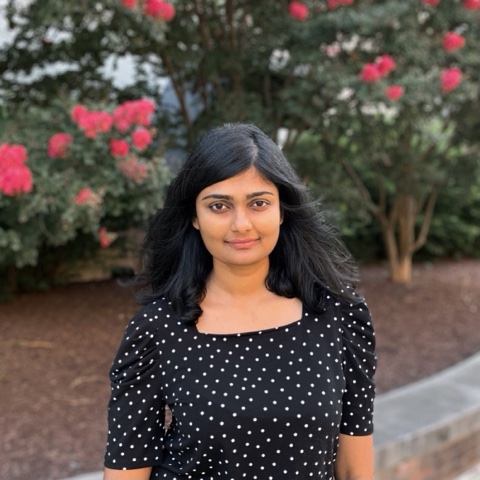
Gowthami SomepalliWorld Labs
Gowthami Somepalli is a member of technical staff at World Labs, working on post-training of generative world models, and a core contributor to Atlas, World Labs' newly released multimodal world model for spatial intelligence. She received her PhD from the University of Maryland, where she studied memorization and data replication in diffusion models, style similarity, and video understanding benchmarks.

Kamal Guptaex-Tesla
Kamal Gupta was most recently a Staff Research Scientist at Tesla AI, where he worked on Optimus, extending large multimodal models into the physical world. His work focuses on multi-task learning and failure recovery, reliability in real-world robotics, and scaling human data collection. He received a PhD in computer science from the University of Maryland, with earlier research stints at Google, NVIDIA, and Amazon.

Ziqi MaCaltech
Ziqi Ma is a PhD student in computing and mathematical sciences at Caltech, advised by Georgia Gkioxari and Yisong Yue, and a Kortschak Scholar, working on 3D computer vision to enable AI in the physical world. Recent work includes SAM 3D for image-to-3D reconstruction, Find Any Part in 3D (an ICCV 2025 highlight) for open-world 3D part localization, and Steer3D for language-steerable editing of generative 3D models, alongside research experience at Meta Superintelligence Labs and Microsoft.

Furong HuangUniversity of Maryland
Furong Huang is an Associate Professor of Computer Science at the University of Maryland. Her research spans trustworthy AI, reinforcement learning, and embodied intelligence, with recent work on visual representation learning for robotic control (TACO, Premier-TACO), vision-language-action models (TraceVLA), and model-based RL under world-model uncertainty (COPlanner). She is a recipient of an NSF CAREER Award, a DARPA Young Faculty Award, an ONR Young Investigator Award, and multiple Amazon and JP Morgan faculty research awards.
Materials
Slides and recordings will be posted after the tutorial.